At first, a sudden “boo!” in an immersive attraction might only trigger a shriek and a laugh – but for insurers, the combination of surprise, darkness, physical risk and heightened emotion presents a complex and growing liability segment.
For the team at No Spoilers, the key is helping horror-themed attractions and escape room operators understand where insurers view risk and what can be done to mitigate it.
What is a jump scare?
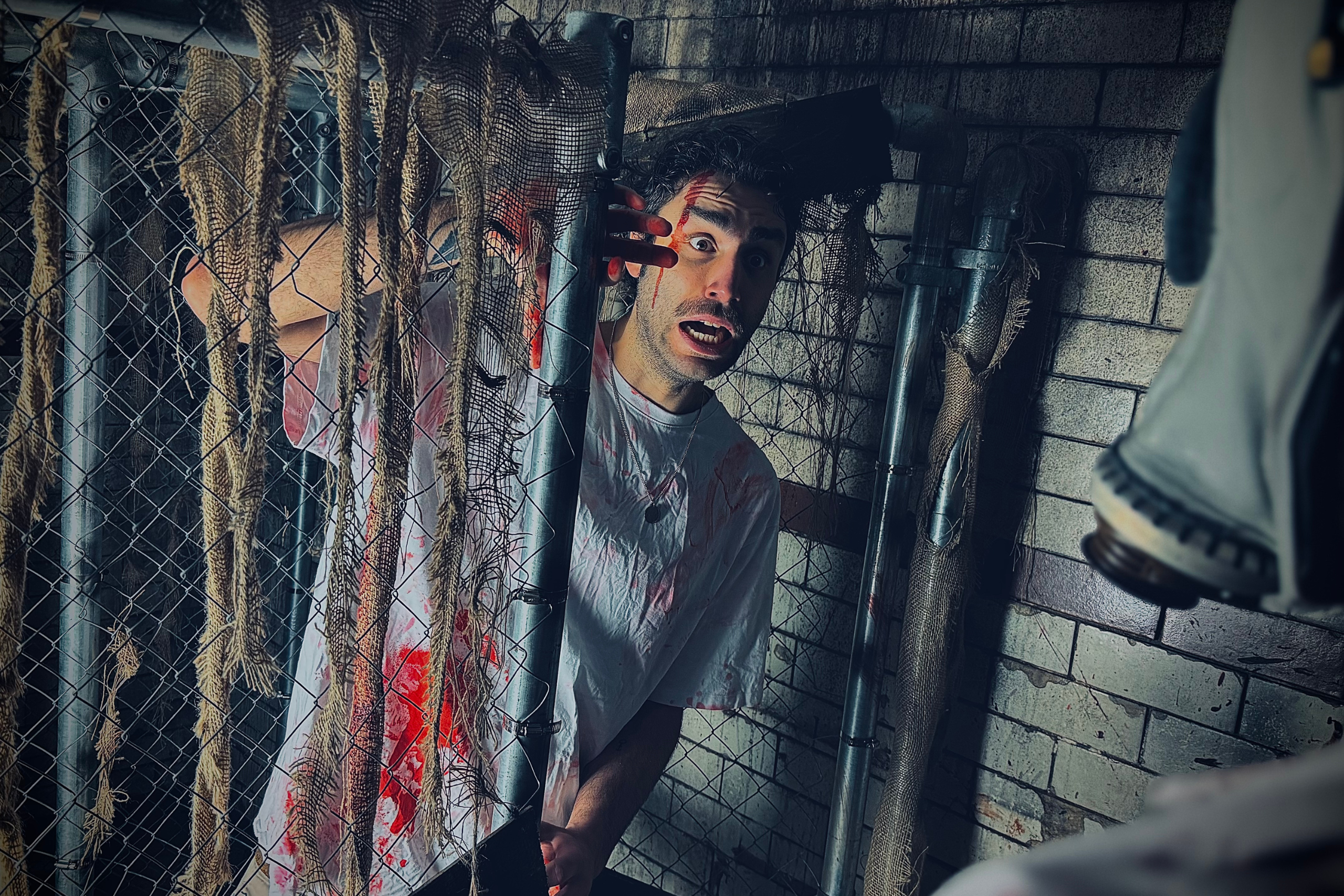
In the context of escape rooms and immersive entertainment venues, a jump scare is a moment designed to elicit a sudden, strong emotional reaction – often fear, surprise or panic – by means of an unexpected action. For example, it could be a prop that moves without warning, an actor that appears out of nowhere, or a loud noise or lighting change.
The effect is immediate: the participant’s body reacts (heart rate spikes, adrenaline flows), the environment becomes momentarily unstable, and the actor-participant interaction creates a time of heightened vulnerability.
In a standard leisure setting, this might be benign – but when you add enclosed spaces, variable lighting, timed puzzles, physical obstacles and surprise elements, the risk profile shifts.
Horror-themed attractions, actors and escape rooms
Escape rooms have traditionally included a range of horror-themed attractions, like dark rooms, actors who chase or jump out, fog, loud sound effects, strobes and hidden doors. The presence of live actors (versus purely puzzle-based games) also increases the human-interaction dimension.
But while all these elements can add to the immersive thrill, they also introduce additional operational and liability risks:
- Actors may perform surprising moves, which could lead to participants stumbling, colliding, or injuring themselves
- The effect of darkness, strobe lights, fog or sudden noise can impair participants’ orientation, increasing chances of tripping
- Participants under stress (heart racing) may suffer panic attacks, fainting, or physical incidents – especially if they have pre-existing conditions
- Surprise scares may lead to unintended behaviour (for example, a participant turning around quickly, running or falling)
- For insurers, such attractions blur the line between a “simple leisure activity” and one with an elevated hazard profile
How insurers might deal with these risks
Most insurers are nervous of “jump scares”, and they can react in several ways, such as:
Refusing to quote
They might decline to provide a quote entirely for your attraction.
Removing cover
We’ve seen a knee-jerk reaction recently where established escape room insurers are removing all cover for jump scares. This has left several escape room owners in a difficult position, having received renewal terms at the very last moment with vital cover removed.
Increasing premiums
Whilst sometimes justified, increasing premiums is also often the tool of the lazy or inexpert underwriter. It’s a quick fix which can deter people from taking insurance or even running the experiences as they envisaged.
Increasing excesses
A more reasonable approach than removing cover for a scare element is to simply increase the excess for the activity itself. This gives insurers a bit more protection from the financial impact of claims, whilst still giving the attraction operator cover for the entire experience.
Imposing conditions
The better insurers will still insure these aspects on the proviso that the risks themselves are managed as well as possible. For most, this would mean a minimum of quality written risk assessments for the aspects involving jump scares themselves.
What escape room owners and immersive operators can do to reduce exposure
To keep thrills high but insurers happy, there are a range of measures you can consider to manage the risks:
Participant briefings
We’ve seen this in virtually every escape room we’ve played – from a simple video to a full in-person briefing prior to the game. Briefings for games involving jump scares should go a little further and clearly explain that there may be surprise elements, actors may appear, or loud noises or strobes may be used.
Disclaimers
Include notices about the nature of the game before people book, and then reinforce the issue at the booking stage. Ideally, you’d require an “opt-in” confirmation from participants that they don’t have any medical issues and are fit to take part.
Actor training
Actors should be trained not just in performance, but in how to respond if a participant becomes distressed, trips or falls. They should also know the escape route, and games should allow immediate intervention if required.
Environment checks
Make the physical space as safe as possible while keeping the immersion. Maintain safe clearance, non-slip flooring, adequate emergency lighting and clearly marked exits – even in darkness, exits and egress paths must be visible or softly lit to meet safety standards. Remove trip hazards, too, and keep cables covered.
Monitor the effect of surprises
Escape rooms use CCTV to run experiences, and one of the side benefits of this is the intel that can be gleaned from watching people play. If you incorporate very sudden scares (e.g. actor jumps from above), watch how participants react and adjust things if unsafe responses are observed (e.g. running, grabbing or colliding). Welcome the learning opportunity that comes from near misses.
Emergency stop/abort option
Ensure sufficient processes are in place for participants and staff to pause or abort a game if someone feels unsafe or unwell. That could be a panic button or staff visible nearby.
Documentation
Keep records of risk assessments, equipment inspections, actor training logs, game modifications and incident logs. This helps insurers defend you if an incident occurs despite you doing everything possible to make the experience safe. It also engenders a culture of safety throughout the team.
Insurance dialogue
Engage proactively with your broker. Disclose the full format of your games (including jump scare elements, live actors and special effects) and ensure your policy documentation reflects that. Undisclosed “surprise” elements could leave you facing the real surprise: insurers rejecting your claims.
Balance thrills and safety with No Spoilers
Jump scares and immersive horror-themed escape rooms bring significant appeal, but they also bring a higher risk profile that insurers are acutely aware of. By recognising the specific hazards associated with surprise, actors, darkness, special effects and participant reaction, you can take sensible steps to manage those risks.
That, in turn, gives insurers the confidence to provide cover on fair terms. For escape room owners, combining thrilling experience with sound safety practices means you can deliver high-impact entertainment and keep your insurers smiling too.
If you’d like to discuss how No Spoilers can support your escape room business with tailored cover and risk management advice, we’d love to help. Contact us today.
Photo by Escape Games Nottingham – Escapologic®